What is Senescence?
Senescence refers to the biological processes of aging at the cellular level. Cells can stop dividing and enter a state where they remain alive but do not function as they should. This can lead to various health issues as tissues and organs start to degrade over time.1Cha J, Aguayo-Mazzucato C, Thompson PJ. Pancreatic β-cell senescence in diabetes: mechanisms, markers and therapies. Front Endocrinol (Lausanne). 2023 Aug 31;14:1212716.
Senescence of the Pancreas:
When the pancreas becomes “worn out” or damaged over time—a process called senescence—it can lead to serious problems.
The pancreas is an organ that has two primary functions:
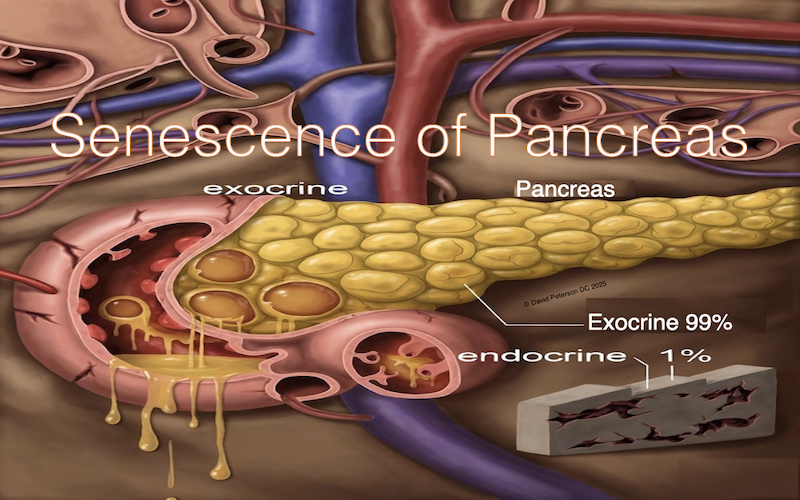
- 99% of the Pancreas (Exocrine) is responsible for producing digestive enzymes to help digest fats, carbohydrates, and proteins.
- The Pancreatic Cells that produce the enzyme have built in safe guards protecting them from the pancreatic enzymes.2Li K, Bian J, Xiao Y, Wang D, Han L, He C, Gong L, Wang M. Changes in Pancreatic Senescence Mediate Pancreatic Diseases. Int J Mol Sci. 2023 Feb 9;24(4):3513.
- 1% of the Pancreas (Endocrine) is responsible for producing hormones like insulin and glucagon to regulate blood sugar.
- The Pancreatic Cells that produce the hormones are not protected from the Enzymes.
What Does the Pancreas Do?
The pancreas is an organ in your belly that:
- Helps Digest Food: It makes special enzymes that break down food.
- Regulates Blood Sugar: It produces insulin, which controls how much sugar is in your blood.
What Happens During Pancreatic Senescence?
As the pancreas becomes senescent and scarred over many years, the damage doesn’t stay neatly inside the pancreas. Severe, long-term or repeated pancreatitis can trigger a dangerous chain reaction that affects the whole body. Doctors call this Multiple Organ Dysfunction Syndrome (MODS) or Multiple Organ Failure.
1. Pancreatic Autodigestion (Self-Digestion):
Normally, the pancreas sends digestive enzymes to your intestines, where they break down food. But if these enzymes are activated too early—inside the pancreas—they can start “digesting” the pancreas itself. This can cause:
- Severe Pain: Often felt in the upper belly and sometimes spreading to the back.
- Inflammation (Pancreatitis): Swelling and damage to the pancreas.
- Infections: As the tissue breaks down, it becomes vulnerable to bacteria.
2. Pancreatic Pseudocysts:
If the pancreas becomes inflamed, it might form fluid-filled sacs called pseudocysts. These aren’t true cysts but collections of fluid, enzymes, and damaged tissue.3Yang, K., Li, X. & Xie, K. Senescence program and its reprogramming in pancreatic premalignancy. Cell Death Dis 14, 528 (2023).
What Can Go Wrong With Pseudocysts?
Leaking Fluid and Enzymes: If the pseudocysts burst or leak, the digestive enzymes and fluid can spill into the abdominal cavity. This can cause:
- Severe Belly Pain
- Swelling in the Abdomen
- Damage to Nearby Organs: These enzymes can “digest” other tissues in the abdomen, much like they digest food.
- Infections: Leaking or ruptured pseudocysts can also lead to life-threatening infections.
3. Exocrine pancreatic insufficiency
Greasy stools, weight loss, malnutrition (as described earlier).
4. Insulin Resistance
Loss of insulin-producing cells.
5. Multiple Organ Dysfunction / Failure – the health-threatening domino effect
When the pancreas is repeatedly or severely inflamed, it releases huge amounts of inflammatory chemicals and active enzymes into the bloodstream. This creates a “systemic inflammation” that can injure distant organs:
- Lungs → Respiratory Distress
- Fluid leaks into the lungs → you can’t get enough oxygen, diagnosed as “Asthma”.
- Kidneys → Chronic kidney injury or kidney dysfunction
- Toxins and low blood pressure from Portal Hypertension cause inflammation shut the kidneys down.
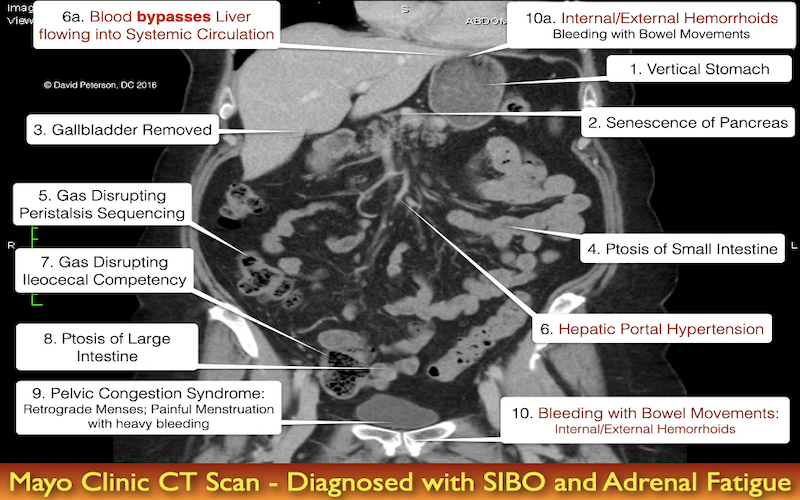
- Heart & blood vessels → Portal Hypertension
- Blood pressure increases because blood vessels become “engorged” and the heart is over-worked attempting to pump blood pooling in the portal venous system and stunned by inflammatory chemicals.
- Liver → Liver dysfunction
- Blood bypasses the liver. Food particle from the intestines enter systemic circulation causing adverse reaction after eating to food. The bad response is blammed on the food and not portal venous system engorgement.
- The liver gets overwhelmed trying to clear all the toxins and inflammatory substances.
- Brain → Confusion, delirium, or coma
- Called “pancreatic encephalopathy” — toxins and poor oxygen delivery affect brain function.
- Blood clotting system → DIC (Disseminated Intravascular Coagulation)
- Portal hypertension causes stagnation of the blood supply and Lymphatic system.
- Tiny blood clots form everywhere → organs don’t get blood, and at the same time you start bleeding uncontrollably.
- Gut → Bacterial translocation
- The inflamed pancreas paralyses the intestines → bacteria leak from the gut into the bloodstream → sepsis gets even worse.
Dr. Dave at HyrSelf Functional Medicine prioritizes organ distress and dysfunction to develop preventive and restorative treatment protocol prior to the onset of the diseased organs. This is done by using the BioScreen Sustain Max blood test and organ lab analysis.
Medical Doctors will delay treatment until several of these organs fail at the same time, then call this condition Multiple Organ Dysfunction Syndrome (MODS). By that time, even with the best intensive-care treatment, the risk of dying is very high (often 50–80% once three or more organs fail).
6. Poor Digestion and Nutrient Absorption:
When the pancreas can’t make enough enzymes due to damage, you might struggle to digest food. This can lead to:
- Oily, smelly stools that float (from undigested fat).
- Bloating and diarrhea.
- Weight loss and malnutrition.
7. Blood Sugar Problems:
If the pancreas can’t produce enough insulin, your blood sugar may rise, increasing the risk of diabetes.
Symptoms to Watch For:
- Severe upper belly pain, especially after eating or drinking.
- Nausea or vomiting that won’t go away.
- Fever or chills (a sign of infection).
- Bloating or swelling in the abdomen.
- Oily or fatty stools.
- Unexplained weight loss.
Why Does This Happen?
Senescence or damage to the pancreas can occur due to:
- Long-term antacid use.
- Long-term alcohol use.
- Portal Hypertension.
- Chronic pancreatitis (long-term inflammation).
- Gallstones.
- Certain medications or trauma.
Why You Shouldn’t Ignore These Issues:
If pancreatic problems like pseudocysts or autodigestion are left untreated, they can lead to severe complications, including:
- Organ failure from spreading infections.
- Internal bleeding in the abdomen.
- Chronic pain and digestion problems.
If you notice symptoms like these, it’s crucial to see a doctor. Early treatment can help prevent life-threatening complications!
References
- 1Cha J, Aguayo-Mazzucato C, Thompson PJ. Pancreatic β-cell senescence in diabetes: mechanisms, markers and therapies. Front Endocrinol (Lausanne). 2023 Aug 31;14:1212716. ↩︎
- 2Li K, Bian J, Xiao Y, Wang D, Han L, He C, Gong L, Wang M. Changes in Pancreatic Senescence Mediate Pancreatic Diseases. Int J Mol Sci. 2023 Feb 9;24(4):3513. ↩︎
- 3Yang, K., Li, X. & Xie, K. Senescence program and its reprogramming in pancreatic premalignancy. Cell Death Dis 14, 528 (2023). ↩︎