- If saliva tests measure only the free (bioavailable) fraction of hormones while blood tests primarily reflect total hormone levels (bound + free), why do so many conventional doctors still rely almost exclusively on serum testing when interpreting results for patients using topical bioidentical hormone replacement therapies like progesterone cream or Bi-Est?
- When a patient has been using progesterone cream for three years and their saliva test shows progesterone levels >2,000 (far above reference ranges) while their blood test shows borderline low progesterone, what does this discrepancy actually tell us about how well the topical hormone is being absorbed and utilized at the tissue level?
- If neither doctor could adequately explain the dramatic differences between the blood and saliva results and each treated their test as the definitive truth, what responsibility do healthcare providers have to educate patients about the limitations and appropriate uses of different hormone testing methods—especially for those on bioidentical HRT?
Her Blood vs. Saliva Hormone Test Story
Sarah was feeling really tired, moody, and had other weird symptoms that made her think something was off with her hormones. Hormones are like messengers in your body that help control things like mood, energy, and how your body works.
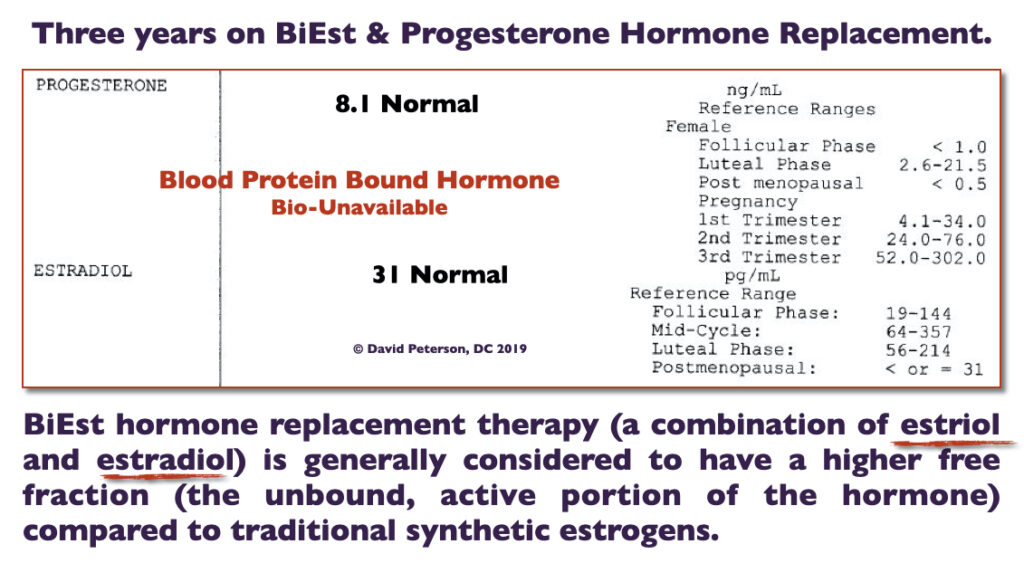
Prescription Replacement Hormones must be Free Fractioned (Bio-Available) to be absorbed and used by the body.
She went to two different doctors for help.
Medical Doctor prescribed BiEst
One doctor was a regular medical doctor. He did a blood test (also called a serum test) to check her hormone levels. This test looks at hormones in the blood, including ones that are attached to proteins and not always active right away. Based on that test, her progesterone (a hormone that helps with things like periods and mood) was a little low, and her estradiol (a type of estrogen) was normal. So he prescribed something called Bi-Est, which is a hormone replacement cream with estrogen to help balance things.
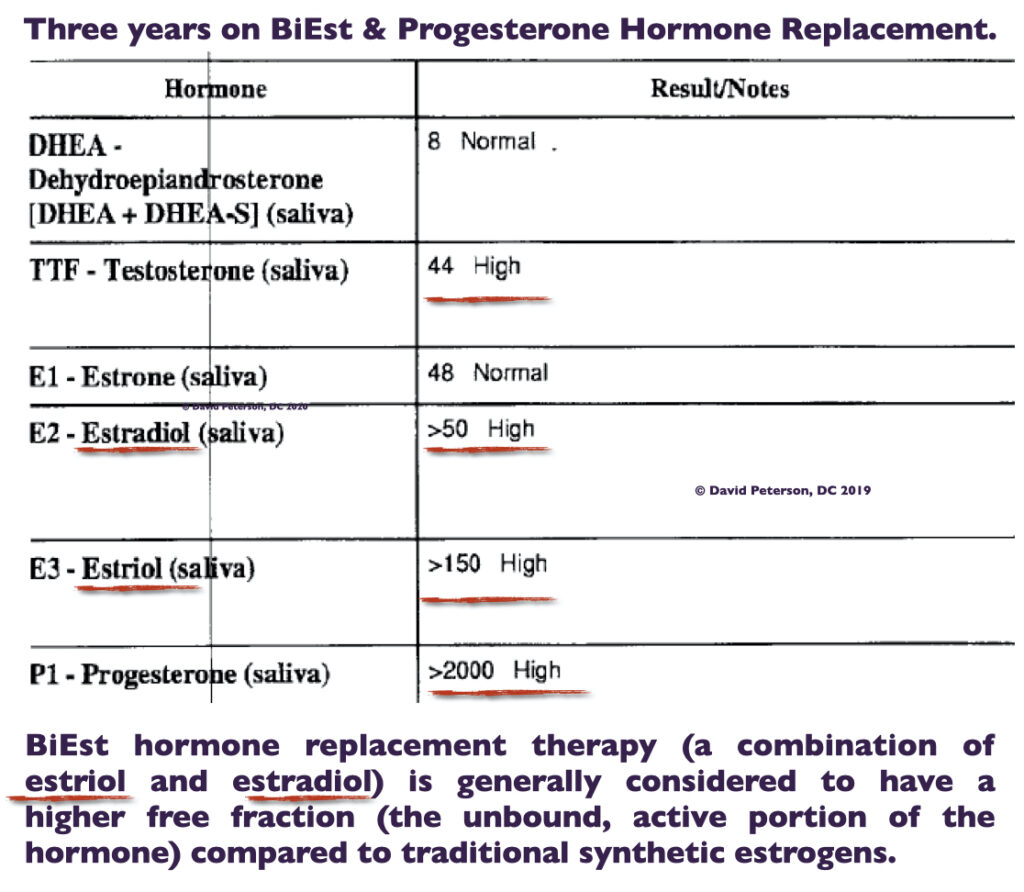
Progesterone Cream and Prescription Replacement Hormones must be Free Fractioned (Bio-Available) to be absorbed and used by the body.
Functional Medcine Doctor prescribed Progesterone Cream
The other doctor practiced functional medicine. He did a saliva test, where Sarah spit into a tube to check her hormones. Saliva tests measure the “free” hormones—the ones that aren’t attached to proteins and are ready for the body to use right away. Her saliva test showed very high progesterone (over 2,000, which was way above normal), high Estriol (over 150), and high estradiol (over 50). These level reflect the three years of Progesterone Cream and BiEst Hormone Replacement Therapy.
The two tests gave totally different results:
- Blood test: Progesterone borderline low, estradiol normal.
- Saliva test: Progesterone – super high (a result of Progesterone cream), Estradiol – high, Estriol – high (a result of BiEst HRT)
- “>” connotes higher than lab test can measure.
Both doctors looked at the results from their own tests and treated her based on that. But neither doctor could explain why the two tests showed such different numbers. They acted like the tests were measuring the exact same thing, but they weren’t really comparing apples to apples.
The blood test measures mostly total hormones (bound + guestimates free), while the saliva test measures only the free, active ones. That’s why they can look so different, especially for hormones like progesterone, estradiol and estriol.
Because the doctors couldn’t agree or explain the differences, and they had different ideas about treatment, Sarah started to lose trust in doctors. She felt confused and frustrated.
A family member told her about me and suggested she come to my office. She decided to try finding her own answers and see if we could figure out what was really going on with her hormones in a different way.
The stark differences arose because:
- Blood tests primarily capture total hormones (bound + some estimate of free).
- Saliva tests specifically measure free, active hormones ready for immediate use by tissues.
Neither doctor could adequately explain the discrepancy or why the tests disagreed so dramatically, treating their respective results as equivalent. This left Sarah frustrated, confused, and losing trust in conventional medical approaches.Ultimately, a family member recommended seeking a different perspective, leading her to explore her hormone situation through another avenue to better understand what was truly happening.
The post highlights a common issue: blood and saliva hormone tests do not measure the same thing, especially for bioidentical HRT users, often causing mismatched interpretations and patient confusion.