
How the Takeover Works
Pathogens use a “divide and conquer” strategy to hijack your internal ecosystem:1Deep A, Chaudhary U, Gupta V. Quorum sensing and Bacterial Pathogenicity: From Molecules to Disease. J Lab Physicians. 2011 Jan;3(1):4-11. 2Miller, M. B., & Bassler, B. L. (2001). Quorum sensing in bacteria. Annual Review of Microbiology, 55, 165–199. 3Boban, T., Nadar, S., & Tauro, S. (2023). Breaking down bacterial communication: A review of quorum quenching agents. Future Journal of Pharmaceutical Sciences, 9(1), 77.
1. Molecular Mimicry
Imagine a robber wearing a police uniform. That is molecular mimicry. Bacteria make proteins that perfectly match your body’s own molecules.4Mondino S, Schmidt S, Buchrieser C. Molecular Mimicry: a Paradigm of Host-Microbe Coevolution Illustrated by Legionella. mBio. 2020 Oct 6;11(5):e01201-20.
- The Cloak: Bacteria wear these proteins like a disguise.
- The Result: The immune system checks the bacteria, sees a “friend,” and lets it pass.
- Real-World Example: Streptococcus pyogenes (the bacteria that causes strep throat) creates a protein that mimics human heart tissue. The immune system gets confused and might accidentally attack the heart, a process known as cross-reaction.5Gowthaman U, Eswarakumar VP. Molecular mimicry: good artists copy, great artists steal. Virulence. 2013 Aug 15;4(6):433-4. 6Finlay B, McFadden G. Anti-Immunology: Evasion of the Host Immune System by Bacterial and Viral Pathogens. Cell, 124, 767-782 7Bärbel S Blaum, Jonathan P Hannan, Andrew P Herbert, David Kavanagh, Dušan Uhrín, Thilo Stehle. Structural basis for sialic acid–mediated self-recognition by complement factor H. Nature Chemical Biology, 2014 8Mondino S, Schmidt S, Buchrieser C. Molecular Mimicry: a Paradigm of Host-Microbe Coevolution Illustrated by Legionella. mBio. 2020 Oct 6;11(5):e01201-20.
2. Antibody Cleavage:
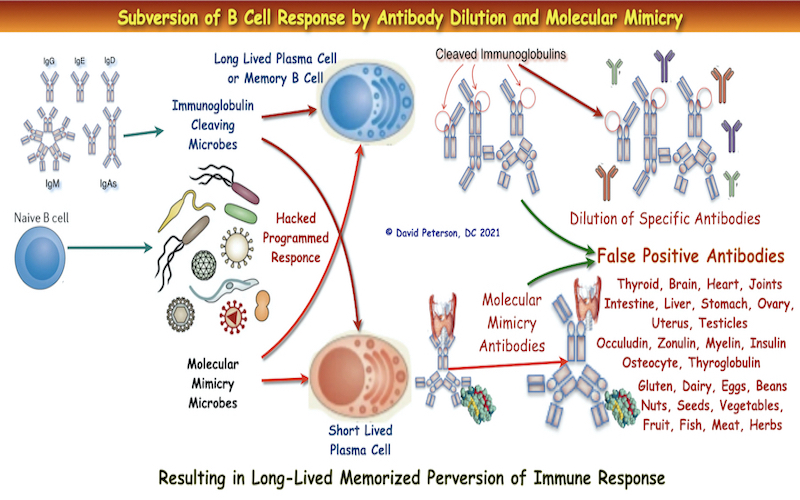
Bacteria cleave antibodies as a highly evolved survival strategy. By disabling the host’s primary immune defenses, these microbes—such as Porphyromonas gingivalis and Streptococcus pyogenes—can aggressively evade destruction, promote chronic inflammation, and cause persistent infections.9de Andrade KQ, Almeida-da-Silva CLC, Coutinho-Silva R. Immunological Pathways Triggered by Porphyromonas gingivalis and Fusobacterium nucleatum: Therapeutic Possibilities? Mediators Inflamm. 2019 Jun 24;2019:7241312. 10Nordenfelt P, Waldemarson S, Linder A, Mörgelin M, Karlsson C, Malmström J, Björck L. Antibody orientation at bacterial surfaces is related to invasive infection. J Exp Med. 2012 Dec 17;209(13):2367-81. 11Qerqez AN, Silva RP, Maynard JA. Outsmarting Pathogens with Antibody Engineering. Annu Rev Chem Biomol Eng. 2023 Jun 8;14:217-241. 12Klara Ferenc, Anna Bożek, Katarzyna Gawron, Immunological pathways triggered by Porphyromonas gingivalis in periodontitis: New insights into molecular mechanisms, Molecular Immunology, Volume 189, 2026, Pages 119-132, 13Nagihan Bostanci, Georgios N. Belibasakis, Porphyromonas gingivalis: an invasive and evasive opportunistic oral pathogen, FEMS Microbiology Letters, Volume 333, Issue 1, August 2012, Pages 1–9,
The Mechanism of Antibody Cleavage
Antibodies (Immunoglobulins or Ig) serve as the body’s security system. An intact antibody is shaped like a “Y” with two primary parts:14Brezski, Randall & Jordan, Robert. (2010). Cleavage of IgGs by proteases associated with invasive diseases. mAbs. 2. 212-20. 10.4161/mabs.2.3.11780. 15Deveuve Q, Lajoie L, Barrault B and Thibault G (2020) The Proteolytic Cleavage of Therapeutic Monoclonal Antibody Hinge Region: More Than a Matter of Subclass. Front. Immunol. 11:168. 16Qerqez AN, Silva RP, Maynard JA. Outsmarting Pathogens with Antibody Engineering. Annu Rev Chem Biomol Eng. 2023 Jun 8;14:217-241. 17Matsunaga N. Evasion of the Host Innate Immune System by Pathogenic Bacteria. Premier Journal of Science 2025;5:100046
- Fab Region (The “Hands”): The top arms that bind to specific bacterial markers (antigens).
- Fc Region (The “Tail”): The bottom stem that acts as an alarm, signaling immune cells (like macrophages) to come eat the bacteria (phagocytosis).18Matsunaga N. Evasion of the Host Innate Immune System by Pathogenic Bacteria. Premier Journal of Science 2025;5:100046
Pathogenic bacteria secrete special enzymes (proteases) that precisely cut the antibody in the hinge region (where the arms meet the tail). This uncouples the binding “hands” from the alarm-ringing “tail”.19Brezski RJ, Jordan RE. Cleavage of IgGs by proteases associated with invasive diseases: an evasion tactic against host immunity? MAbs. 2010 May-Jun;2(3):212-20.
Why This Strategy Works
- Disabling the Alarm (Fc Cleavage): By destroying the Fc stem, the bacteria prevent immune cells from recognizing the “tag”. The bacteria are never eaten or destroyed.20Brezski, R. J., & Jordan, R. E. (2010). Cleavage of IgGs by proteases associated with invasive diseases: an evasion tactic against host immunity? mAbs, 2(3), 212–220. 21Belo Y, Malach E, Hayouka Z. Recruiting the Immune System against Pathogenic Bacteria Using High-Affinity Chimeric Tags. Bioconjug Chem. 2024 Nov 20;35(11):1716-1722.
- Blocking Reinforcements (Complement System): The complement system is a network of proteins that helps antibodies kill bacteria. Cleaved antibody fragments float around and block normal complement activation, effectively creating a “shield”.22Lambris JD, Ricklin D, Geisbrecht BV. Complement evasion by human pathogens. Nat Rev Microbiol. 2008 Feb;6(2):132-42. 23Brezski RJ, Jordan RE. Cleavage of IgGs by proteases associated with invasive diseases: an evasion tactic against host immunity? MAbs. 2010 May-Jun;2(3):212-20. 24Jacelyn MS Loh, Haniyeh Aghababa, Thomas Proft, Eluding the immune system’s frontline defense: Secreted complement evasion factors of pathogenic Gram-positive cocci, Microbiological Research, Volume 277, 2023, 127512,
- Creating a Decoy: The cut-off antibody fragments can still bind to the bacteria. However, because the alarm tail is gone, these fragments just coat the bacteria, acting as a disguise that blocks new, functional antibodies from attaching.25Qerqez AN, Silva RP, Maynard JA. Outsmarting Pathogens with Antibody Engineering. Annu Rev Chem Biomol Eng. 2023 Jun 8;14:217-241. 26Burnett DL, et al. Germinal center antibody mutation trajectories are determined by rapid self/foreign discrimination. Science 2018 27Goodnow CC, et al. Altered immunoglobulin expression and functional silencing of self-reactive B lymphocytes in transgenic mice. Nature 1988: 334:676-682
- Invasion: Once the immune response is neutralized locally, the bacteria can freely invade tissues, spread through the body, and consume the nutrients released by damaged host cells.28de Andrade KQ, Almeida-da-Silva CLC, Coutinho-Silva R. Immunological Pathways Triggered by Porphyromonas gingivalis and Fusobacterium nucleatum: Therapeutic Possibilities? Mediators Inflamm. 2019 Jun 24;2019:7241312.
3. Molecular Trickery
Molecular trickery means bacteria cheat to change how the host works. They send out special tools—like tiny keys—to unlock or break your cells.29de Jong M.F. and Alto N.M. Cooperative Immune Suppression by Escherichia coli and Shigella Effector Proteins. Infection and Immunity 2017. 30S. Groen et al. Virus infection of plants alters pollinator preference: A payback for susceptible hosts?PLOS Pathogens. August 11, 2016. 31Johnson AG, Kranzusch PJ. What bacterial cell death teaches us about life. PLoS Pathog. 2022 Oct 27;18(10):e1010879. 32Paczosa M.K. and Meczas J. Klebsiella pneumoniae: Going on the Defense with a Strong Offense. Molecular and Microbiology Reviews 2015.
- The Strategy: Bacteria release “effector proteins” into your cells.
- The Tactic: These proteins hijack your cells. They turn off alarms, steal food, or force the cell to do what the bacteria want.
- Real-World Example: Staphylococcus bacteria release proteins that jam the immune system’s signals, stopping your body from calling for backup.33Mondino S, Schmidt S, Buchrieser C. Molecular Mimicry: a Paradigm of Host-Microbe Coevolution Illustrated by Legionella. mBio. 2020 Oct 6;11(5):e01201-20. 34Koch AL. Death of bacteria in growing culture. J Bacteriol. 1959;77(5):623-629. 35Gibson SER, et al. Bacteria encode post-mortem protein catabolism that enables altruistic nutrient recycling. Nat Commun. 2025;16(1):1400. 36Gottesman S. Proteases and their targets in Escherichia coli. Annu Rev Genet. 1996;30(1):465-506. 37Diggle SP, et al. Cooperation and conflict in quorum-sensing bacterial populations. Nature. 2007;450(7168):411-414. 38de Jong M.F. and Alto N.M. Cooperative Immune Suppression by Escherichia coli and Shigella Effector Proteins. Infection and Immunity 2017. 39Paczosa M.K. and Meczas J. Klebsiella pneumoniae: Going on the Defense with a Strong Offense. Molecular and Microbiology Reviews 2015.
4. Immune Paralysis:
The keystone pathogen (such as Porphyromonas gingivalis) sends out toxic proteins to block your immune system. Your body cannot kill the invader.40M. A. Curtis, J. A. Garnett, and R. P. Darveau, “ The Keystone-Pathogen Hypothesis Updated: The Role of Porphyromonas gingivalis in Periodontitis,” Journal of Periodontal Research (2025): 1–19, 41Darveau RP, et al. Porphyromonas gingivalis as a potential community activist for disease. J Dent Res. 2012; 91:816–820. 42Kilian M. Degradation of immunoglobulins A2, A2, and G by suspected principal periodontal pathogens. Infect Immun. 1981 Dec;34(3):757-65.
43Darveau RP, et al. Local chemokine paralysis, a novel pathogenic mechanism for Porphyromonas gingivalis. Infect Immun. 1998; 66:1660–1665.
5. Minion Creation:
Because the pathogen stops your immune cells from clearing it out, an unnatural inflammation occurs. Normal, peaceful bacteria cannot survive in this toxic, inflamed environment.44M. A. Curtis, J. A. Garnett, and R. P. Darveau, “ The Keystone-Pathogen Hypothesis Updated: The Role of Porphyromonas gingivalis in Periodontitis,” Journal of Periodontal Research (2025): 1–19, 45George Hajishengallis, Richard J. Lamont, Dancing with the Stars: How Choreographed Bacterial Interactions Dictate Nososymbiocity and Give Rise to Keystone Pathogens, Accessory Pathogens, and Pathobionts, Trends in Microbiology, Volume 24, Issue 6, 2016, Pages 477-489,
46Peiyuan Sun, et. al. Treponema pallidum cytolytic toxin, Tp0649, induces apoptosis in THP-1 macrophages via the ERK MAPK, p38 MAPK, PI3K/AKT, and NF-κB signaling pathways, Microbial Pathogenesis, Volume 208, 2025, 107975, 47Petrut S-M, Bragaru AM, Munteanu AE, Moldovan A-D, Moldovan C-A, Rusu E. Gut over Mind: Exploring the Powerful Gut–Brain Axis. Nutrients. 2025; 17(5):842.
6. Community Remodeling:
The surviving microbes are forced to adapt to the inflammation. They become destructive “minions” that feed the pathogen and cause widespread disease.48Hajishengallis G, Darveau RP, Curtis MA. The keystone-pathogen hypothesis. Nat Rev Microbiol. 2012 Oct;10(10):717-25. 49Hajishengallis G, Krauss JL, Liang S, McIntosh ML, Lambris JD. Pathogenic microbes and community service through manipulation of innate immunity. Adv Exp Med Biol. 2012;946:69-85.
7. Altering the Environment:
Pathogens trigger inflammation in the gut lining. This changes the local chemistry, such as the increased alkalinity level (pH). Pathogenic bacteria create their preferred alkaline environment.50Shen Y, Fan N, Ma SX, Cheng X, Yang X, Wang G. Gut Microbiota Dysbiosis: Pathogenesis, Diseases, Prevention, and Therapy. MedComm (2020). 2025 Apr 18;6(5):e70168. 51Bäumler AJ, Sperandio V. Interactions between the microbiota and pathogenic bacteria in the gut. Nature. 2016 Jul 7;535(7610):85-93. 52Khan I, Bai Y, Zha L, Ullah N, Ullah H, Shah SRH, Sun H, Zhang C. Mechanism of the Gut Microbiota Colonization Resistance and Enteric Pathogen Infection. Front Cell Infect Microbiol. 2021 Dec 23;11:716299. 53Appanna VD. Dysbiosis, Probiotics, and Prebiotics: In Diseases and Health. Human Microbes – The Power Within. 2018 Feb 6:81–122. 54Min’an Zhao, Jiayi Chu, Shiyao Feng, Chuanhao Guo, Baigong Xue, Kan He, Lisha Li, Immunological mechanisms of inflammatory diseases caused by gut microbiota dysbiosis: A review, Biomedicine & Pharmacotherapy, Volume 164, 2023, 114985 55Jones EM, Cochrane CA, Percival SL. The Effect of pH on the Extracellular Matrix and Biofilms. Adv Wound Care (New Rochelle). 2015 Jul 1;4(7):431-439. 56Yarahmadi, A., Emrahoglu, S., Afkhami, H. et al. Integrative insights into the oral microbiome’s role in systemic diseases: novel therapeutic strategies and future directions. Antonie van Leeuwenhoek 118, 178 (2025).
8. Resource Manipulation:
They release specific proteins that target human pathways. They steal nutrients that normal bacteria need, starving out the beneficial microbes.57Krachler AM, Woolery AR, Orth K. Manipulation of kinase signaling by bacterial pathogens. J Cell Biol. 2011 Dec 26;195(7):1083-92. 58Veronika Young, et. al. Effector–host interactome map links type III secretion systems in healthy gut microbiomes to immune modulation. Nature Microbiology, 2026; 11 (2): 442 59Helmholtz Munich. “Scientists find gut bacteria inject proteins that control your immune system.” ScienceDaily. ScienceDaily, 27 March 2026. 60Hajishengallis G, Darveau RP, Curtis MA. The keystone-pathogen hypothesis. Nat Rev Microbiol. 2012 Oct;10(10):717-25. 61Horrocks V, King OG, Yip AYG, Marques IM, McDonald JAK. Role of the gut microbiota in nutrient competition and protection against intestinal pathogen colonization. Microbiology (Reading). 2023;169(8):001377. 62Casadevall A, Dadachova E, Pirofski LA. Passive antibody therapy for infectious diseases. Nat Rev Microbiol. 2004;2(9):695-703. 63Pacheco AR.Sperandio V. 2015. Enteric Pathogens Exploit the Microbiota-generated Nutritional Environment of the Gut. Microbiol Spectr 3:10.1128/microbiolspec.mbp-0001-2014.
9. Recruiting “Minions”:
Once the environment is altered, previously harmless bacteria adapt by changing their behavior to survive. These “minion” microbes begin producing compounds that further benefit the pathogen.64Hajishengallis G, Darveau RP, Curtis MA. The keystone-pathogen hypothesis. Nat Rev Microbiol. 2012 Oct;10(10):717-25. 65M. A. Curtis, J. A. Garnett, and R. P. Darveau, “ The Keystone-Pathogen Hypothesis Updated: The Role of Porphyromonas gingivalis in Periodontitis,” Journal of Periodontal Research (2025): 1–19,
10. Quorum Sensing (QS):
Bacteria do not just float in silence; they “talk” by releasing small chemical molecules called autoinducers. When the population of a pathogen reaches a specific threshold (a “quorum”), these chemicals signal the group to activate dangerous traits. The pathogen uses QS to command nearby microbes to change their behavior.66George Hajishengallis, Immunomicrobial pathogenesis of periodontitis: keystones, pathobionts, and host response, Trends in Immunology, Volume 35, Issue 1, 2014, Pages 3-11, 67Rutherford ST, Bassler BL. Bacterial quorum sensing: its role in virulence and possibilities for its control. Cold Spring Harb Perspect Med. 2012 Nov 1;2(11):a012427.
11. Metabolic Rewiring:
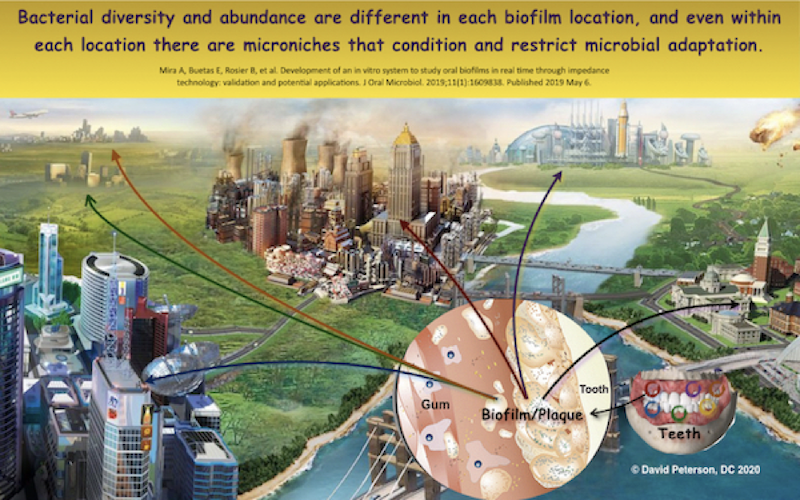
The pathogen changes the environment to suit its needs. It creates a stressful or nutrient-rich habitat (like altering the pH or oxygen levels). Harmless bacteria must adapt or die. To survive, they change their metabolism and become “minions” that produce byproducts the pathogen thrives on.
68Jiang Q, Chen J, Yang C, Yin Y, Yao K. Quorum Sensing: A Prospective Therapeutic Target for Bacterial Diseases. Biomed Res Int. 2019 Apr 4;2019:2015978. 69Hajishengallis G. Immunomicrobial pathogenesis of periodontitis: keystones, pathobionts, and host response. Trends in Immunology, 2013; 35, 3-11 70Cui Z, Wang P and Gao W (2025) Microbial dysbiosis in periodontitis and peri-implantitis: pathogenesis, immune responses, and therapeutic. Front. Cell. Infect. Microbiol. 15:1517154. 71M. A. Curtis, J. A. Garnett, and R. P. Darveau, “ The Keystone-Pathogen Hypothesis Updated: The Role of Porphyromonas gingivalis in Periodontitis,” Journal of Periodontal Research (2025): 1–19, 72Rutherford ST, Bassler BL. Bacterial quorum sensing: its role in virulence and possibilities for its control. Cold Spring Harb Perspect Med. 2012 Nov 1;2(11):a012427.
12. Biofilm Formation:
Pathogens and minions build a shield called a biofilm. A biofilm is a thick, sticky layer of slime and proteins that encases the bacteria. This acts as a fortress. It blocks antibiotics and protects the entire microbial community from the host’s immune system.73Nadell CD, Xavier JB, Levin SA, Foster KR. The evolution of quorum sensing in bacterial biofilms. PLoS Biol. 2008 Jan;6(1):e14. 74Holm A, Vikström E. Quorum sensing communication between bacteria and human cells: signals, targets, and functions. Front Plant Sci. 2014 Jun 26;5:309. 75Cui Z, Wang P and Gao W (2025) Microbial dysbiosis in periodontitis and peri-implantitis: pathogenesis, immune responses, and therapeutic. Front. Cell. Infect. Microbiol. 15:1517154.
References
- 1Deep A, Chaudhary U, Gupta V. Quorum sensing and Bacterial Pathogenicity: From Molecules to Disease. J Lab Physicians. 2011 Jan;3(1):4-11.
- 2Miller, M. B., & Bassler, B. L. (2001). Quorum sensing in bacteria. Annual Review of Microbiology, 55, 165–199.
- 3Boban, T., Nadar, S., & Tauro, S. (2023). Breaking down bacterial communication: A review of quorum quenching agents. Future Journal of Pharmaceutical Sciences, 9(1), 77.
- 4Mondino S, Schmidt S, Buchrieser C. Molecular Mimicry: a Paradigm of Host-Microbe Coevolution Illustrated by Legionella. mBio. 2020 Oct 6;11(5):e01201-20.
- 5Gowthaman U, Eswarakumar VP. Molecular mimicry: good artists copy, great artists steal. Virulence. 2013 Aug 15;4(6):433-4.
- 6Finlay B, McFadden G. Anti-Immunology: Evasion of the Host Immune System by Bacterial and Viral Pathogens. Cell, 124, 767-782
- 7Bärbel S Blaum, Jonathan P Hannan, Andrew P Herbert, David Kavanagh, Dušan Uhrín, Thilo Stehle. Structural basis for sialic acid–mediated self-recognition by complement factor H. Nature Chemical Biology, 2014
- 8Mondino S, Schmidt S, Buchrieser C. Molecular Mimicry: a Paradigm of Host-Microbe Coevolution Illustrated by Legionella. mBio. 2020 Oct 6;11(5):e01201-20.
- 9de Andrade KQ, Almeida-da-Silva CLC, Coutinho-Silva R. Immunological Pathways Triggered by Porphyromonas gingivalis and Fusobacterium nucleatum: Therapeutic Possibilities? Mediators Inflamm. 2019 Jun 24;2019:7241312.
- 10Nordenfelt P, Waldemarson S, Linder A, Mörgelin M, Karlsson C, Malmström J, Björck L. Antibody orientation at bacterial surfaces is related to invasive infection. J Exp Med. 2012 Dec 17;209(13):2367-81.
- 11Qerqez AN, Silva RP, Maynard JA. Outsmarting Pathogens with Antibody Engineering. Annu Rev Chem Biomol Eng. 2023 Jun 8;14:217-241.
- 12Klara Ferenc, Anna Bożek, Katarzyna Gawron, Immunological pathways triggered by Porphyromonas gingivalis in periodontitis: New insights into molecular mechanisms, Molecular Immunology, Volume 189, 2026, Pages 119-132,
- 13Nagihan Bostanci, Georgios N. Belibasakis, Porphyromonas gingivalis: an invasive and evasive opportunistic oral pathogen, FEMS Microbiology Letters, Volume 333, Issue 1, August 2012, Pages 1–9,
- 14Brezski, Randall & Jordan, Robert. (2010). Cleavage of IgGs by proteases associated with invasive diseases. mAbs. 2. 212-20. 10.4161/mabs.2.3.11780.
- 15Deveuve Q, Lajoie L, Barrault B and Thibault G (2020) The Proteolytic Cleavage of Therapeutic Monoclonal Antibody Hinge Region: More Than a Matter of Subclass. Front. Immunol. 11:168.
- 16Qerqez AN, Silva RP, Maynard JA. Outsmarting Pathogens with Antibody Engineering. Annu Rev Chem Biomol Eng. 2023 Jun 8;14:217-241.
- 17Matsunaga N. Evasion of the Host Innate Immune System by Pathogenic Bacteria. Premier Journal of Science 2025;5:100046
- 18Matsunaga N. Evasion of the Host Innate Immune System by Pathogenic Bacteria. Premier Journal of Science 2025;5:100046
- 19Brezski RJ, Jordan RE. Cleavage of IgGs by proteases associated with invasive diseases: an evasion tactic against host immunity? MAbs. 2010 May-Jun;2(3):212-20.
- 20Brezski, R. J., & Jordan, R. E. (2010). Cleavage of IgGs by proteases associated with invasive diseases: an evasion tactic against host immunity? mAbs, 2(3), 212–220.
- 21Belo Y, Malach E, Hayouka Z. Recruiting the Immune System against Pathogenic Bacteria Using High-Affinity Chimeric Tags. Bioconjug Chem. 2024 Nov 20;35(11):1716-1722.
- 22Lambris JD, Ricklin D, Geisbrecht BV. Complement evasion by human pathogens. Nat Rev Microbiol. 2008 Feb;6(2):132-42.
- 23Brezski RJ, Jordan RE. Cleavage of IgGs by proteases associated with invasive diseases: an evasion tactic against host immunity? MAbs. 2010 May-Jun;2(3):212-20.
- 24Jacelyn MS Loh, Haniyeh Aghababa, Thomas Proft, Eluding the immune system’s frontline defense: Secreted complement evasion factors of pathogenic Gram-positive cocci, Microbiological Research, Volume 277, 2023, 127512,
- 25Qerqez AN, Silva RP, Maynard JA. Outsmarting Pathogens with Antibody Engineering. Annu Rev Chem Biomol Eng. 2023 Jun 8;14:217-241.
- 26Burnett DL, et al. Germinal center antibody mutation trajectories are determined by rapid self/foreign discrimination. Science 2018
- 27Goodnow CC, et al. Altered immunoglobulin expression and functional silencing of self-reactive B lymphocytes in transgenic mice. Nature 1988: 334:676-682
- 28de Andrade KQ, Almeida-da-Silva CLC, Coutinho-Silva R. Immunological Pathways Triggered by Porphyromonas gingivalis and Fusobacterium nucleatum: Therapeutic Possibilities? Mediators Inflamm. 2019 Jun 24;2019:7241312.
- 29de Jong M.F. and Alto N.M. Cooperative Immune Suppression by Escherichia coli and Shigella Effector Proteins. Infection and Immunity 2017.
- 30S. Groen et al. Virus infection of plants alters pollinator preference: A payback for susceptible hosts?PLOS Pathogens. August 11, 2016.
- 31Johnson AG, Kranzusch PJ. What bacterial cell death teaches us about life. PLoS Pathog. 2022 Oct 27;18(10):e1010879.
- 32Paczosa M.K. and Meczas J. Klebsiella pneumoniae: Going on the Defense with a Strong Offense. Molecular and Microbiology Reviews 2015.
- 33Mondino S, Schmidt S, Buchrieser C. Molecular Mimicry: a Paradigm of Host-Microbe Coevolution Illustrated by Legionella. mBio. 2020 Oct 6;11(5):e01201-20.
- 34Koch AL. Death of bacteria in growing culture. J Bacteriol. 1959;77(5):623-629.
- 35Gibson SER, et al. Bacteria encode post-mortem protein catabolism that enables altruistic nutrient recycling. Nat Commun. 2025;16(1):1400.
- 36Gottesman S. Proteases and their targets in Escherichia coli. Annu Rev Genet. 1996;30(1):465-506.
- 37Diggle SP, et al. Cooperation and conflict in quorum-sensing bacterial populations. Nature. 2007;450(7168):411-414.
- 38de Jong M.F. and Alto N.M. Cooperative Immune Suppression by Escherichia coli and Shigella Effector Proteins. Infection and Immunity 2017.
- 39Paczosa M.K. and Meczas J. Klebsiella pneumoniae: Going on the Defense with a Strong Offense. Molecular and Microbiology Reviews 2015.
- 40M. A. Curtis, J. A. Garnett, and R. P. Darveau, “ The Keystone-Pathogen Hypothesis Updated: The Role of Porphyromonas gingivalis in Periodontitis,” Journal of Periodontal Research (2025): 1–19,
- 41Darveau RP, et al. Porphyromonas gingivalis as a potential community activist for disease. J Dent Res. 2012; 91:816–820.
- 42Kilian M. Degradation of immunoglobulins A2, A2, and G by suspected principal periodontal pathogens. Infect Immun. 1981 Dec;34(3):757-65.
- 43Darveau RP, et al. Local chemokine paralysis, a novel pathogenic mechanism for Porphyromonas gingivalis. Infect Immun. 1998; 66:1660–1665.
- 44M. A. Curtis, J. A. Garnett, and R. P. Darveau, “ The Keystone-Pathogen Hypothesis Updated: The Role of Porphyromonas gingivalis in Periodontitis,” Journal of Periodontal Research (2025): 1–19,
- 45George Hajishengallis, Richard J. Lamont, Dancing with the Stars: How Choreographed Bacterial Interactions Dictate Nososymbiocity and Give Rise to Keystone Pathogens, Accessory Pathogens, and Pathobionts, Trends in Microbiology, Volume 24, Issue 6, 2016, Pages 477-489,
- 46Peiyuan Sun, et. al. Treponema pallidum cytolytic toxin, Tp0649, induces apoptosis in THP-1 macrophages via the ERK MAPK, p38 MAPK, PI3K/AKT, and NF-κB signaling pathways, Microbial Pathogenesis, Volume 208, 2025, 107975,
- 47Petrut S-M, Bragaru AM, Munteanu AE, Moldovan A-D, Moldovan C-A, Rusu E. Gut over Mind: Exploring the Powerful Gut–Brain Axis. Nutrients. 2025; 17(5):842.
- 48Hajishengallis G, Darveau RP, Curtis MA. The keystone-pathogen hypothesis. Nat Rev Microbiol. 2012 Oct;10(10):717-25.
- 49Hajishengallis G, Krauss JL, Liang S, McIntosh ML, Lambris JD. Pathogenic microbes and community service through manipulation of innate immunity. Adv Exp Med Biol. 2012;946:69-85.
- 50Shen Y, Fan N, Ma SX, Cheng X, Yang X, Wang G. Gut Microbiota Dysbiosis: Pathogenesis, Diseases, Prevention, and Therapy. MedComm (2020). 2025 Apr 18;6(5):e70168.
- 51Bäumler AJ, Sperandio V. Interactions between the microbiota and pathogenic bacteria in the gut. Nature. 2016 Jul 7;535(7610):85-93.
- 52Khan I, Bai Y, Zha L, Ullah N, Ullah H, Shah SRH, Sun H, Zhang C. Mechanism of the Gut Microbiota Colonization Resistance and Enteric Pathogen Infection. Front Cell Infect Microbiol. 2021 Dec 23;11:716299.
- 53Appanna VD. Dysbiosis, Probiotics, and Prebiotics: In Diseases and Health. Human Microbes – The Power Within. 2018 Feb 6:81–122.
- 54Min’an Zhao, Jiayi Chu, Shiyao Feng, Chuanhao Guo, Baigong Xue, Kan He, Lisha Li, Immunological mechanisms of inflammatory diseases caused by gut microbiota dysbiosis: A review, Biomedicine & Pharmacotherapy, Volume 164, 2023, 114985
- 55Jones EM, Cochrane CA, Percival SL. The Effect of pH on the Extracellular Matrix and Biofilms. Adv Wound Care (New Rochelle). 2015 Jul 1;4(7):431-439.
- 56Yarahmadi, A., Emrahoglu, S., Afkhami, H. et al. Integrative insights into the oral microbiome’s role in systemic diseases: novel therapeutic strategies and future directions. Antonie van Leeuwenhoek 118, 178 (2025).
- 57Krachler AM, Woolery AR, Orth K. Manipulation of kinase signaling by bacterial pathogens. J Cell Biol. 2011 Dec 26;195(7):1083-92.
- 58Veronika Young, et. al. Effector–host interactome map links type III secretion systems in healthy gut microbiomes to immune modulation. Nature Microbiology, 2026; 11 (2): 442
- 59Helmholtz Munich. “Scientists find gut bacteria inject proteins that control your immune system.” ScienceDaily. ScienceDaily, 27 March 2026.
- 60Hajishengallis G, Darveau RP, Curtis MA. The keystone-pathogen hypothesis. Nat Rev Microbiol. 2012 Oct;10(10):717-25.
- 61Horrocks V, King OG, Yip AYG, Marques IM, McDonald JAK. Role of the gut microbiota in nutrient competition and protection against intestinal pathogen colonization. Microbiology (Reading). 2023;169(8):001377.
- 62Casadevall A, Dadachova E, Pirofski LA. Passive antibody therapy for infectious diseases. Nat Rev Microbiol. 2004;2(9):695-703.
- 63Pacheco AR.Sperandio V. 2015. Enteric Pathogens Exploit the Microbiota-generated Nutritional Environment of the Gut. Microbiol Spectr 3:10.1128/microbiolspec.mbp-0001-2014.
- 64Hajishengallis G, Darveau RP, Curtis MA. The keystone-pathogen hypothesis. Nat Rev Microbiol. 2012 Oct;10(10):717-25.
- 65M. A. Curtis, J. A. Garnett, and R. P. Darveau, “ The Keystone-Pathogen Hypothesis Updated: The Role of Porphyromonas gingivalis in Periodontitis,” Journal of Periodontal Research (2025): 1–19,
- 66George Hajishengallis, Immunomicrobial pathogenesis of periodontitis: keystones, pathobionts, and host response, Trends in Immunology, Volume 35, Issue 1, 2014, Pages 3-11,
- 67Rutherford ST, Bassler BL. Bacterial quorum sensing: its role in virulence and possibilities for its control. Cold Spring Harb Perspect Med. 2012 Nov 1;2(11):a012427.
- 68Jiang Q, Chen J, Yang C, Yin Y, Yao K. Quorum Sensing: A Prospective Therapeutic Target for Bacterial Diseases. Biomed Res Int. 2019 Apr 4;2019:2015978.
- 69Hajishengallis G. Immunomicrobial pathogenesis of periodontitis: keystones, pathobionts, and host response. Trends in Immunology, 2013; 35, 3-11
- 70Cui Z, Wang P and Gao W (2025) Microbial dysbiosis in periodontitis and peri-implantitis: pathogenesis, immune responses, and therapeutic. Front. Cell. Infect. Microbiol. 15:1517154.
- 71M. A. Curtis, J. A. Garnett, and R. P. Darveau, “ The Keystone-Pathogen Hypothesis Updated: The Role of Porphyromonas gingivalis in Periodontitis,” Journal of Periodontal Research (2025): 1–19,
- 72Rutherford ST, Bassler BL. Bacterial quorum sensing: its role in virulence and possibilities for its control. Cold Spring Harb Perspect Med. 2012 Nov 1;2(11):a012427.
- 73Nadell CD, Xavier JB, Levin SA, Foster KR. The evolution of quorum sensing in bacterial biofilms. PLoS Biol. 2008 Jan;6(1):e14.
- 74Holm A, Vikström E. Quorum sensing communication between bacteria and human cells: signals, targets, and functions. Front Plant Sci. 2014 Jun 26;5:309.
- 75Cui Z, Wang P and Gao W (2025) Microbial dysbiosis in periodontitis and peri-implantitis: pathogenesis, immune responses, and therapeutic. Front. Cell. Infect. Microbiol. 15:1517154.


