- If estradiol is the “master key” with perfect fit and strong binding (high affinity and efficacy), why might weaker estrogens like estrone or estriol still produce noticeable effects in certain life stages (e.g., post-menopause or pregnancy), even though their potency is only 1/10 or 1/100 that of estradiol?
Estrogenic potency is measured by how strongly it binds to estrogen receptors (ERs) and triggers cellular responses, with weaker compounds causing greater effects at lower concentrations.
Estrogen(s) with low “Potency” can have stronger “Effects” than those with “High Potency”.
Potency is basically affinity × efficacy combined. So the meme that Estradiol being the “strongest” has nothing to do with the vasomotor, physiologic, immunologic and metabolic effects of the hormone. The “strength” is about estradiol ability to attach to hormone receptors.
1Watson CS, Jeng YJ, & Kochukov MY (2008). Nongenomic actions of estradiol compared with estrone and estriol in pituitary tumor cell signaling and proliferation. FASEB J, 22(9), 3328–3336. 2Fuentes N, Silveyra P. Estrogen receptor signaling mechanisms. Adv Protein Chem Struct Biol. 2019;116:135-170.
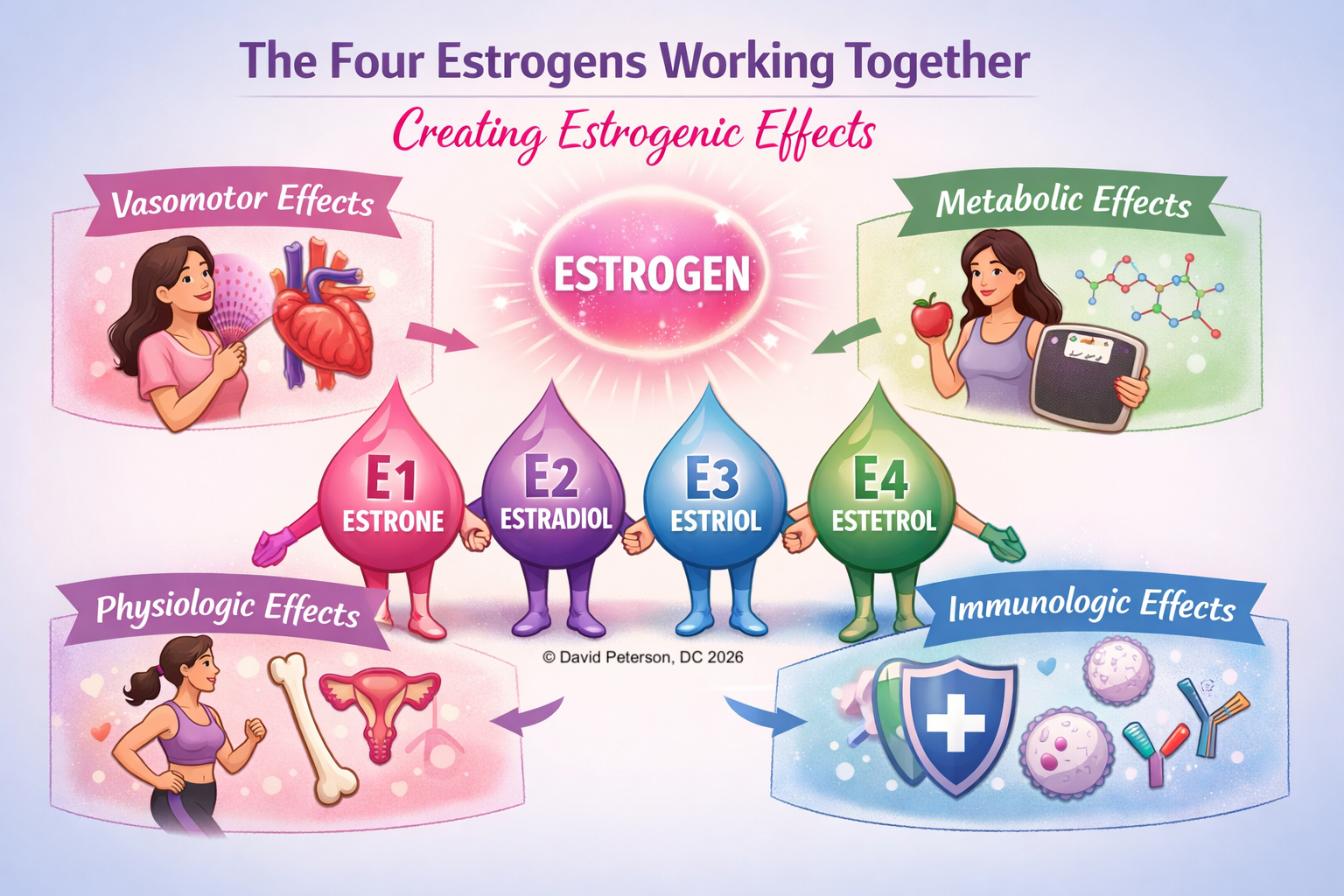
Effects is measured by the Vasomotor, Metabolic, Physiologic, and Immunologic effects the Estrogen(s) cause. Estrogen(s) with low “Potency” can have stronger “Effects” than those with “High Potency”.
Estrogenic potency tells us how good that key is compared to the real, strongest natural key — which is estradiol (the main powerful form of estrogen in your body during your reproductive years).
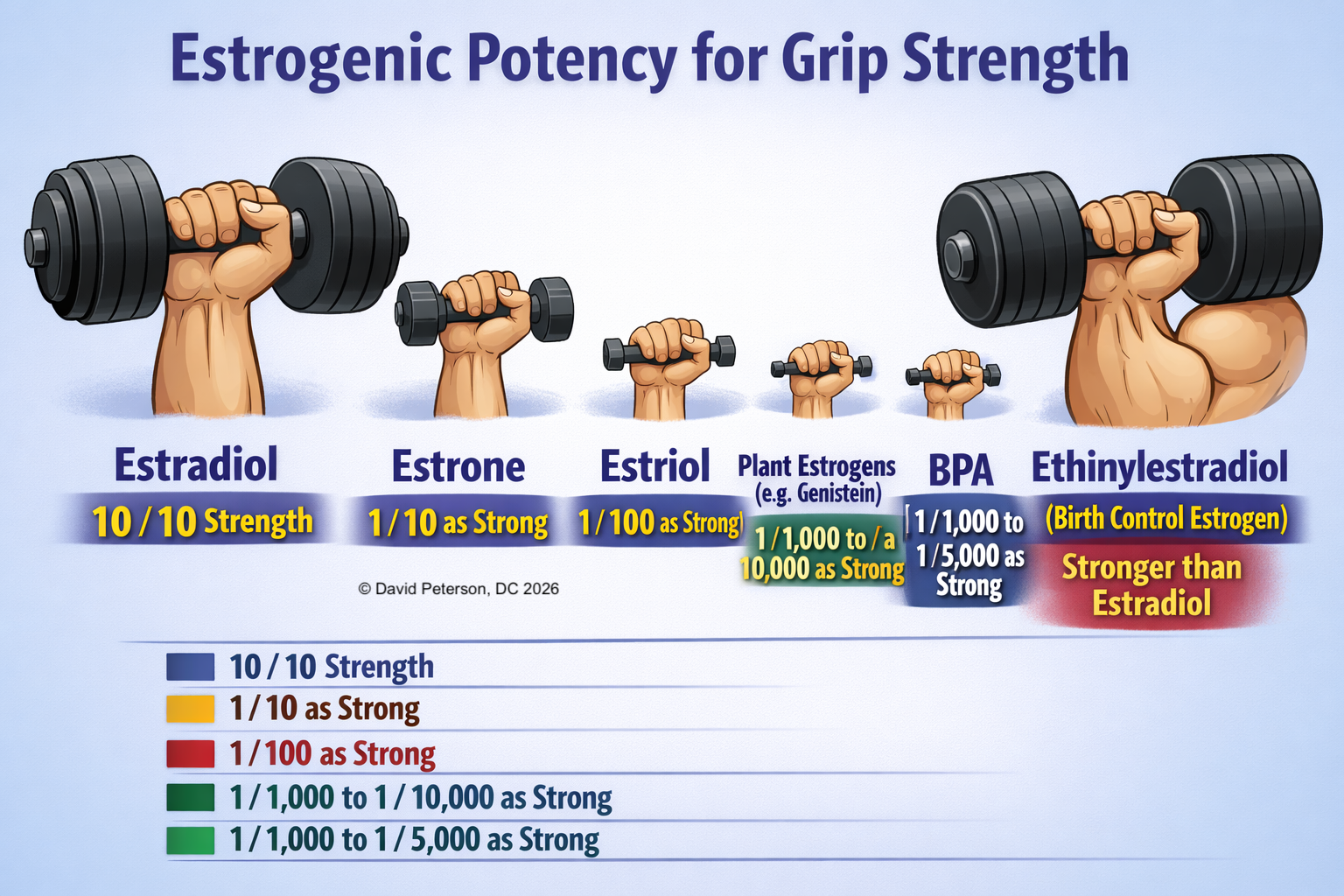
The estrogenic potency of β-estradiol is 12 times that of estrone and 80 times that of estriol. Considering these relative potencies, one can see that the total estrogenic binding strength of b-estradiol is usually many times that of the other two together. For this reason, estradiol is considered the major estrogen, although the estrogenic binding strength of estrone are not negligible.
Estrogenic potency tells us how good that key is compared to the real, strongest natural key — which is estradiol (the main powerful form of estrogen in your body during your reproductive years).
Here’s a simple ranking with everyday examples:
- Estradiol (your body’s strongest natural estrogen) → potency = 10/10 (the master key — fits perfectly and holds on to the lock very strongly)
- Estrone (another natural estrogen, more common after menopause) → about 1/10 as strong as estradiol
- Estriol (main estrogen during pregnancy) → only about 1/100 as strong
- Many plant estrogens (phytoestrogens like in soy — genistein) → usually 1/1,000 to 1/10,000 as strong
- BPA (the plastic chemical people worry about) → roughly 1/1,000 to 1/5,000 as strong as estradiol
- Some birth control estrogens (like ethinylestradiol) → actually stronger binding strength than natural estradiol in some ways
So when scientists say a chemical has high estrogenic potency, they mean it can hold onto estrogen hormone receptors very effectively even at tiny doses.
Estrogenic potency means how strong something bind to the estrogen hormone receptors in the body.
The main way we measure this strength is by how well a substance sticks (binds) to special proteins called estrogen receptors (there are two main kinds: ERα and ERβ). These receptors are like locks, and the substance is like a key.3Jeyakumar M, Carlson KE, Gunther JR, Katzenellenbogen JA. Exploration of dimensions of estrogen potency: parsing ligand binding and coactivator binding affinities. J Biol Chem. 2011 Apr 15;286(15):12971-82 But sticking isn’t everything. Strength also depends on two big things:
- Affinity — how tightly the key fits and sticks in the lock.
- Efficacy — how well the key, once stuck in, turns the lock and makes the cell do its job (like sending signals inside the cell).
References
- 1Watson CS, Jeng YJ, & Kochukov MY (2008). Nongenomic actions of estradiol compared with estrone and estriol in pituitary tumor cell signaling and proliferation. FASEB J, 22(9), 3328–3336.
- 2Fuentes N, Silveyra P. Estrogen receptor signaling mechanisms. Adv Protein Chem Struct Biol. 2019;116:135-170.
- 3Jeyakumar M, Carlson KE, Gunther JR, Katzenellenbogen JA. Exploration of dimensions of estrogen potency: parsing ligand binding and coactivator binding affinities. J Biol Chem. 2011 Apr 15;286(15):12971-82