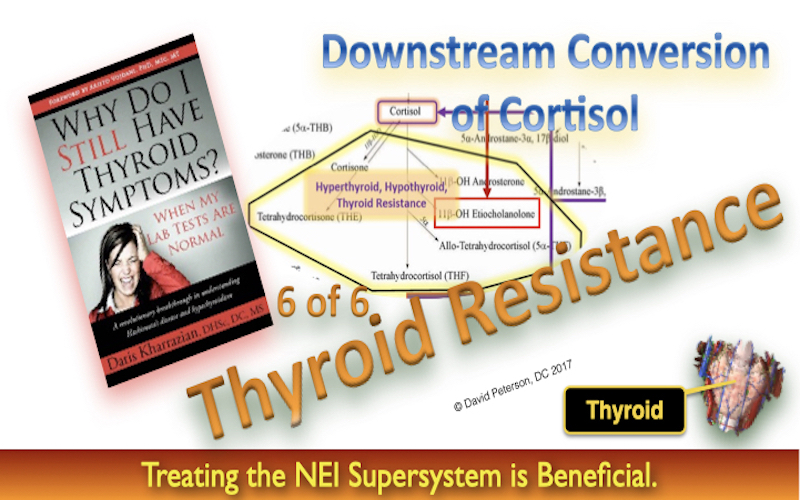
Thyroid resistance (as described by Dr. Datis Kharrazian) is when your cells essentially “tune out” thyroid hormone, so you can have normal (or even adequate) amounts of hormone in your blood yet still experience classic low-thyroid symptoms.
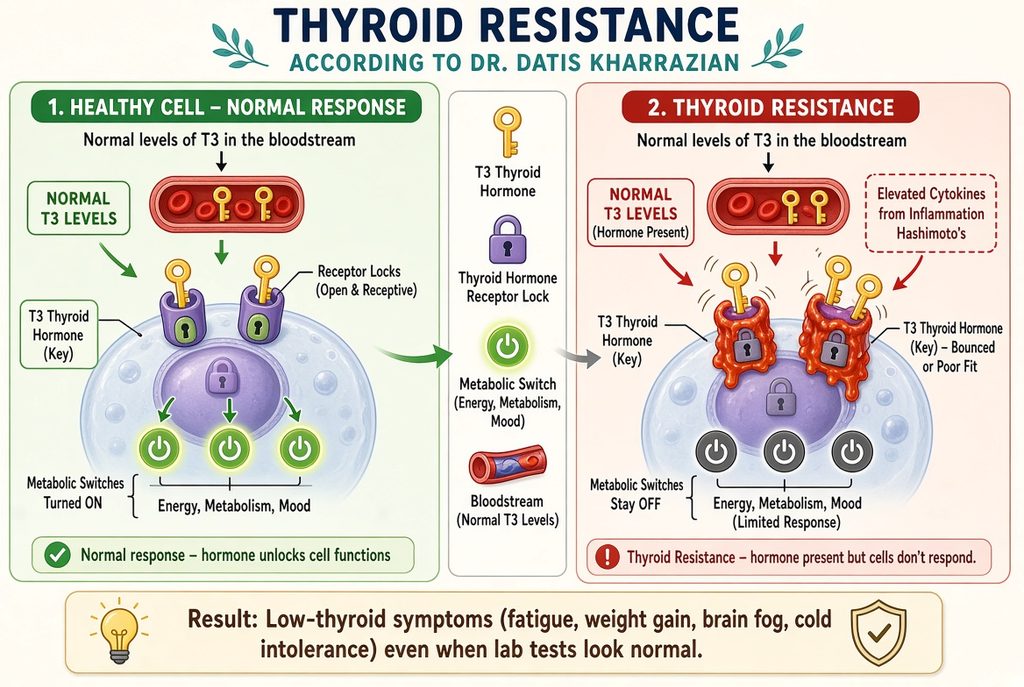
In his book Why Do I Still Have Thyroid Symptoms? When My Lab Tests Are Normal?, Kharrazian explains that thyroid hormone must bind to receptor sites on (and inside) your cells to turn on the metabolic “switches” that regulate energy, temperature, mood, digestion, and more. When those receptor sites become less sensitive or responsive, the hormone can’t do its job effectively—even if blood tests look fine.
The main driver he emphasizes: elevated cytokines from inflammation or autoimmunity
Pro-inflammatory chemical messengers called cytokines (especially those linked to a TH-1 immune dominance, common in Hashimoto’s) reduce the cells’ sensitivity to thyroid hormones. This creates a functional “resistance.”
This is particularly relevant for people with Hashimoto’s (the autoimmune thyroid condition Kharrazian focuses on as the root of most hypothyroidism). The ongoing immune attack generates cytokines that:
- Block or down-regulate thyroid hormone receptor sites.
- Can also impair conversion of inactive T4 into active T3.
As a result, many people on thyroid replacement medication still feel hypothyroid (fatigued, cold, gaining weight, depressed, constipated, brain-fogged, etc.) because the hormone isn’t landing properly at the cellular level. Lab numbers may look “normal,” yet symptoms persist.
Kharrazian lists this as one of the patterns of low thyroid function (among roughly 6 major patterns and up to 22 more detailed ones in the book). In the thyroid-resistance pattern, TSH, T4, and T3 can all appear normal while the person still has symptoms. Other factors he and related discussions note can contribute include chronic stress/high cortisol (which can also affect receptor sensitivity) and, in some cases, excess hormones creating cellular overwhelm.
Simple analogy
Think of thyroid hormone as a key and the cell receptors as locks. In thyroid resistance, the locks get sticky or change shape (largely due to inflammatory “gunk” from cytokines). Extra keys (more hormone medication) may help a little, but they won’t fully open the doors until you clean up the inflammation that’s messing with the locks.
Kharrazian’s core message is that simply adding more thyroid hormone often isn’t enough. Addressing the underlying immune dysregulation, inflammation, blood-sugar issues, gut health, stress, and other drivers that elevate cytokines is essential so the hormone can actually work at the cellular level.
This is a functional/clinical perspective grounded in the research and patterns Kharrazian presents in the book; it is not the same as the allopathy/medical form of thyroid hormone resistance (Resistance to Thyroid Hormone syndrome). Always work with a knowledgeable practitioner for personalized evaluation and care.
Thyroid Hormone Resistance Support Products
Related Keywords:
- Thyroid health
- Hypothyroidism symptoms
- Hashimoto’s thyroiditis treatment
- Non-thyroid conditions mimicking hypothyroidism
- Thyroid function tests
- Thyroid hormone replacement therapy
Top Competitor Sites with URLs:
- EndocrineWeb – https://www.endocrineweb.com/
- American Thyroid Association – https://www.thyroid.org/
- Mayo Clinic – https://www.mayoclinic.org/diseases-conditions/hypothyroidism/
Suggested Sites for Outreach and Backlinks:
- National Institute of Diabetes and Digestive and Kidney Diseases (NIDDK) – https://www.niddk.nih.gov/
- American Association of Clinical Endocrinologists (AACE) – https://www.aace.com/
- Thyroid Foundation of Canada – https://thyroid.ca/