Why Your Doctors Might Miss the Pancreas–Skin Connection
An important issue in healthcare is the lack of awareness among medical professionals about the potential connection between skin signs and pancreatic diseases. While pancreatic diseases are commonly associated with digestive symptoms, it’s crucial to recognize that they can also manifest with dermatological symptoms.1Lankisch, P.G., Weber-Dany, B., Maisonneuve, P. and Lowenfels, A.B. (2009), Skin signs in acute pancreatitis: frequency and implications for prognosis. Journal of Internal Medicine, 265: 299-301. This oversight often leads to delayed diagnoses and missed opportunities for early intervention.2Kunovsky L, Dite P, Brezinova E, Sedlakova L, Trna J, Jabandziev P. Skin manifestations of pancreatic diseases. Biomed Pap Med Fac Univ Palacky Olomouc Czech Repub. 2022 Dec;166(4):353-358. doi: 10.5507/bp.2022.035. Epub 2022 Jul 22. PMID: 35938387.
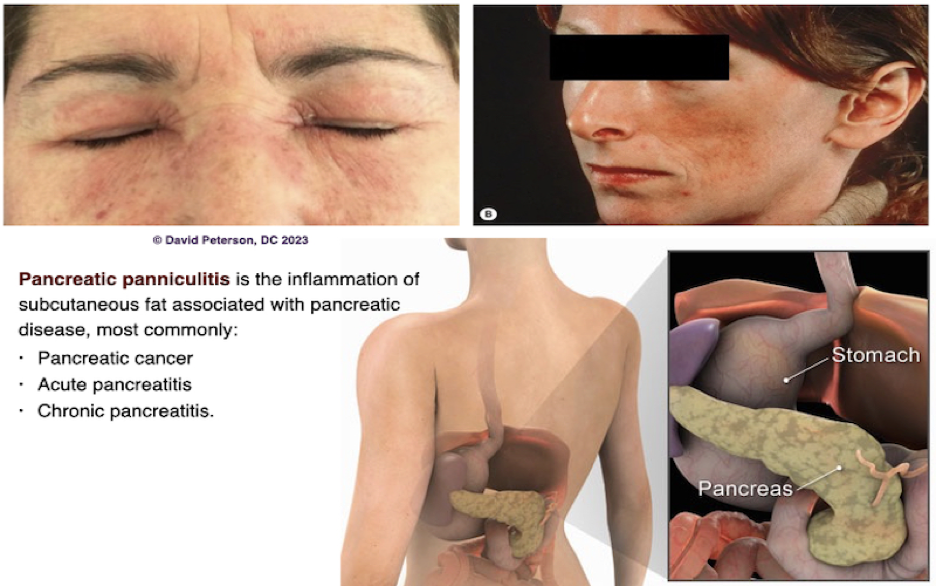
Pancreatic panniculitis is one such skin manifestation that can be linked to pancreatic insufficiency. However, it is often treated as a purely dermatological issue, overlooking its potential connection to underlying pancreatic dysfunction.3Miulescu R, Balaban DV, Sandru F, Jinga M. Cutaneous Manifestations in Pancreatic Diseases-A Review. J Clin Med. 2020 Aug 12;9(8):2611. doi: 10.3390/jcm9082611. PMID: 32806580; PMCID: PMC7464368. This problem is compounded by the compartmentalization of medical specialties, where specialists in one field may not consider the broader implications of certain symptoms.
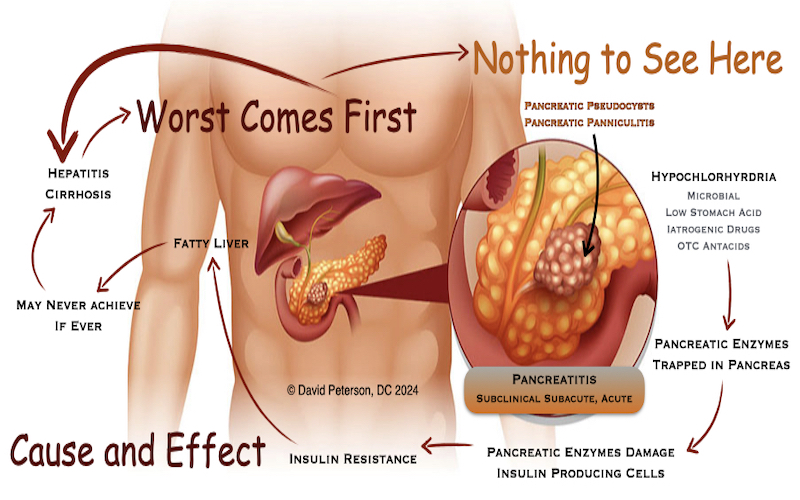
Recognition of skin signs associated with pancreatic pathology is essential for both diagnosis and prognosis. Skin lesions can serve as diagnostic clues for pancreatic diseases and may also indicate the severity of the condition. However, medical professionals, other than dermatologists, often lack awareness of these cutaneous signs, leading to missed opportunities for early detection and intervention.
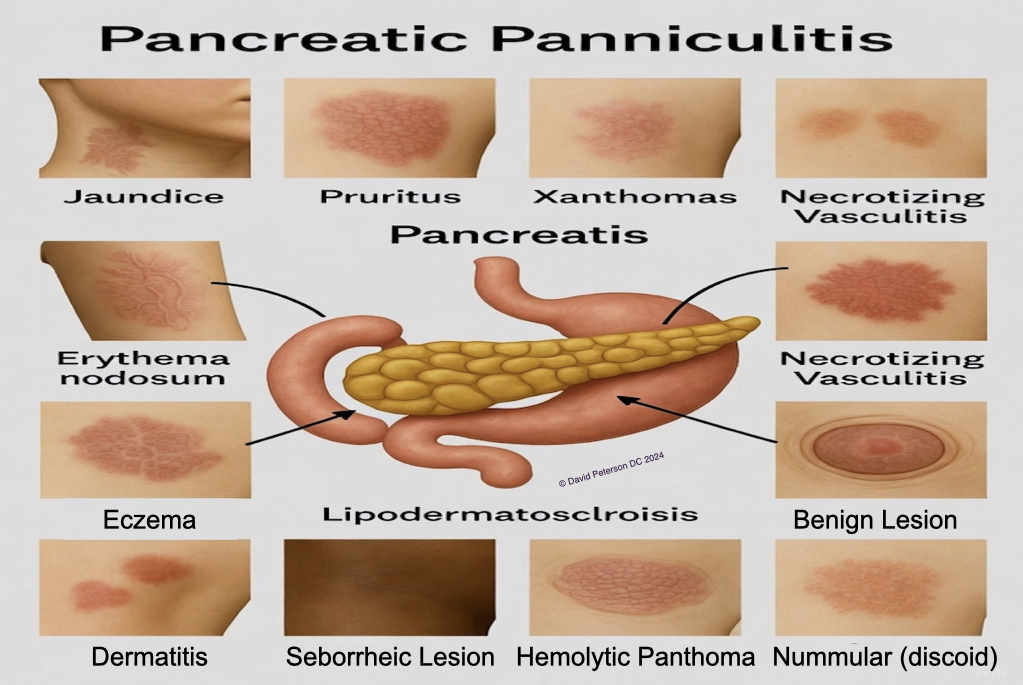
Pancreatic diseases encompass a range of conditions, including acute and chronic pancreatitis, autoimmune pancreatitis, and pancreatic cancer. While digestive symptoms are common in these conditions, dermatological manifestations can occur, sometimes preceding abdominal symptoms. For example, jaundice and pruritus, along with scratching-induced skin lesions, may be seen in cases where pancreatic disease obstructs bile flow.4Pinte L., Balaban D.V., Baicus C., Jinga M. Non-alcoholic fatty pancreas disease—Practices for clinicians. Rom. J. Intern. Med. 2019;57:209–219.,5Miulescu R, Balaban DV, Sandru F, Jinga M. Cutaneous Manifestations in Pancreatic Diseases-A Review. J Clin Med. 2020 Aug 12;9(8):2611.
Furthermore, systemic diseases that involve the pancreas, such as hemochromatosis and metabolic syndrome with fatty pancreas, can also manifest with specific skin signs. These signs, including hyperpigmentation and xanthomas, can provide valuable diagnostic insights when correctly recognized.
In conclusion, improving awareness among medical specialists beyond dermatology about the potential skin clues associated with pancreatic pathology is crucial for early detection, timely diagnosis, and appropriate multidisciplinary care for patients with pancreatic diseases. Recognizing the connection between skin signs and pancreatic dysfunction can lead to earlier interventions and improved patient outcomes.

Why Your Doctors Might Miss the Pancreas–Skin Connection
Imagine your body is like a big house with different specialists who only work in certain rooms:
- Dermatologists are the “skin painters.” They spend years learning every rash, bump, and discoloration on the outside of the house. When they see tender, red, lumpy spots on your shins (classic pancreatic panniculitis), most of them think “weird skin inflammation” and treat it with creams or steroids (which suppress the immune system). Their training and daily work almost never include the pancreas, or any other organ, so the idea that those spots could mean something is wrong deep inside the abdomen rarely crosses their mind.
- General practitioners (family doctors) are the “general handymen.” They fix the most common leaks and squeaky doors. They see hundreds of patients a week and have maybe 10–15 minutes per visit. Even if they’ve heard of pancreatic panniculitis once in medical school, it’s so rare, not that it never occurs. It is rare because that would mean a referral to another doctor and if they do. They usually send the patient to a dermatologist and move on.
- Gastroenterologists are the “plumbing and gut experts.” They live in the world of stomach pain, diarrhea, weight loss, and abnormal blood tests. Dominated by prescriptions for antacids and beta-blockeers. Unless the patient already has belly symptoms or sky-high lipase/amylase levels, a gastroenterologist almost never gets to see the skin lesions in the first place.
So why doesn’t someone just connect the dots?
- Tunnel vision from training
Each specialty is trained to stay in its lane. Crossing lanes feels like practicing outside your license, and doctors can actually get in trouble for ordering tests that seem “unrelated” to their specialty. - Money and time don’t reward connecting the dots
- Insurance companies pay dermatologists only for skin codes, not for “thinking about the pancreas.” If a dermatologist spends 30 minutes researching rare pancreas-skin links or calling a gastroenterologist, they get paid exactly $0 extra for that time.
- Family doctors are paid per visit, not per mystery solved. Ordering a pancreatic enzyme blood test or a CT scan “just because of funny skin bumps” is almost guaranteed to be denied by insurance as “not medically necessary,” and the doctor may even get scolded by the insurance company.
- Referring the patient to a gastroenterologist means the family doctor or dermatologist loses that patient (and all future income from them) to another doctor.
- “Follow the money” in plain English
The current system pays doctors to treat what’s obviously in front of them and to stay inside their little box. It does not pay them to play detective across multiple organ systems. Rare connections like pancreas → skin lesions fall straight through the cracks because nobody gets rewarded for catching them—and everyone risks losing time, money, or getting denied if they try.
In short: the doctors aren’t dumb or lazy; the system is built to keep everyone in separate silos. Until the payment structure changes, these rarely diagnosed, but important pancreas-skin clues will keep being missed, even when the signs are literally written on the patient’s skin.
References
- 1Lankisch, P.G., Weber-Dany, B., Maisonneuve, P. and Lowenfels, A.B. (2009), Skin signs in acute pancreatitis: frequency and implications for prognosis. Journal of Internal Medicine, 265: 299-301. ↩︎
- 2Kunovsky L, Dite P, Brezinova E, Sedlakova L, Trna J, Jabandziev P. Skin manifestations of pancreatic diseases. Biomed Pap Med Fac Univ Palacky Olomouc Czech Repub. 2022 Dec;166(4):353-358. doi: 10.5507/bp.2022.035. Epub 2022 Jul 22. PMID: 35938387. ↩︎
- 3Miulescu R, Balaban DV, Sandru F, Jinga M. Cutaneous Manifestations in Pancreatic Diseases-A Review. J Clin Med. 2020 Aug 12;9(8):2611. doi: 10.3390/jcm9082611. PMID: 32806580; PMCID: PMC7464368. ↩︎
- 4Pinte L., Balaban D.V., Baicus C., Jinga M. Non-alcoholic fatty pancreas disease—Practices for clinicians. Rom. J. Intern. Med. 2019;57:209–219. ↩︎
- 5Miulescu R, Balaban DV, Sandru F, Jinga M. Cutaneous Manifestations in Pancreatic Diseases-A Review. J Clin Med. 2020 Aug 12;9(8):2611. ↩︎