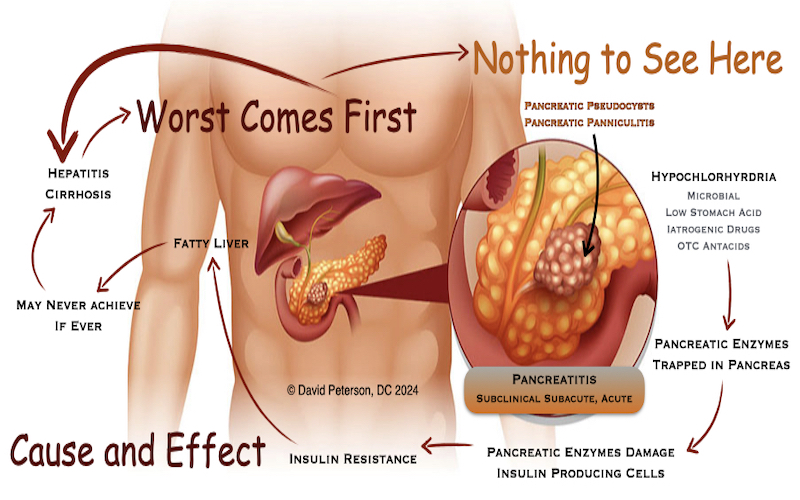
Exocrine pancreatic insufficiency (EPI) happens when the pancreas doesn’t produce enough digestive enzymes, which help break down food in the intestines. This can happen due to damage to the pancreas, which might occur from diseases like chronic pancreatitis, portal hypertension, or due to the pancreas starting to “digest” itself (a process called autodigestion).
How Pancreatic Damage Leads to Insulin Resistance
How Digestive Enzymes Leak into the Blood
Systemic Problems from Enzyme Leakage
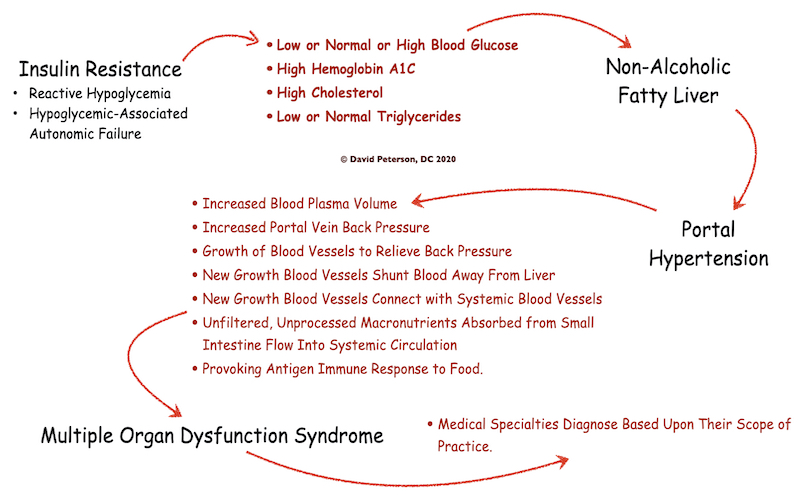
Imagine your pancreas is a hardworking factory in your abdomen that runs two very important assembly lines 24/7 for your whole life:
- The big assembly line (99% of the factory) → makes powerful digestive juices (enzymes) that break down the fat, protein, and carbs in your food.
- The tiny assembly line (only 1% of the factory) → makes hormones, especially insulin, that control your blood sugar.
Just like any factory that never gets a day off, over decades, parts of the pancreas eventually “wear out.” Scientists call this wear-out process at the cellular level senescence (pronounced “seh-NESS-ents”).When pancreatic cells become senescent, they don’t die right away, but they stop working properly and often start releasing inflammatory chemicals. Over time, this aging + inflammation makes the whole organ more fragile and prone to big problems.
When the pancreas is damaged, whether by diseases, injury, or a process called autodigestion (where the pancreas begins to digest itself), it can cause serious problems in both digestion and how the body functions as a whole. One major issue is that digestive enzymes, which are normally meant to break down food in the intestines, can leak into the bloodstream. This happens because the pancreas becomes weakened or inflamed, and the barrier between the exocrine (enzyme-producing) and endocrine (hormone-producing) parts of the pancreas breaks down.
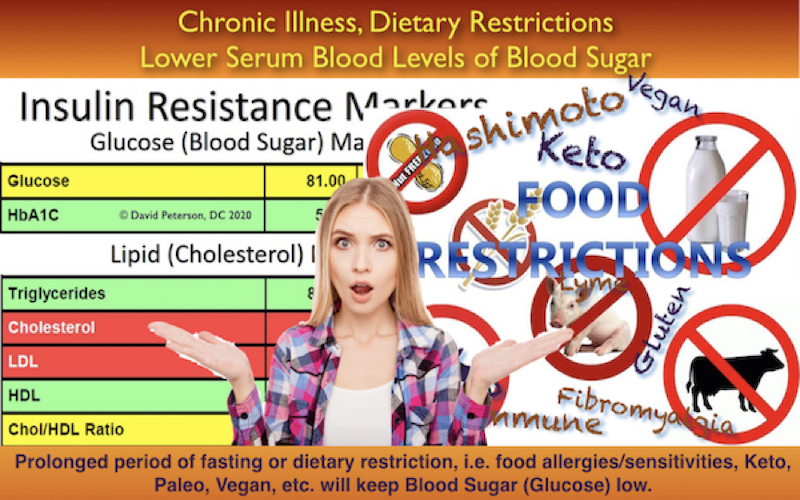
What is Insulin Resistance?
Insulin resistance is when your body’s cells don’t respond well to insulin, the hormone that helps control blood sugar. This can lead to high levels of insulin in your blood, and over time, it can cause fatty liver disease, where fat builds up in the liver. A fatty liver doesn’t work as efficiently, which can affect several important functions, including how it handles iron, hormones, and toxins.
How Pancreatic Damage Leads to Insulin Resistance:
1. Pancreatic Damage and Insulin Production:
- When the pancreas is damaged by conditions like chronic inflammation or autodigestion, it can harm the beta cells in the pancreas that produce insulin. If fewer beta cells are working, the pancreas may not make enough insulin to regulate blood sugar properly.
2. Digestive Problems Leading to Nutrient Deficiency:
- In EPI, the pancreas doesn’t produce enough enzymes to break down food, especially fats, proteins, and carbohydrates. This can lead to malnutrition because the body isn’t absorbing enough nutrients.
- Malnutrition and poor digestion can interfere with how the body uses insulin. If the body isn’t getting enough essential nutrients, it can lead to insulin resistance, where the body doesn’t respond to insulin as well as it should.
3. Inflammation:
- Damage to the pancreas often causes chronic inflammation. Inflammation can spread through the body and affect how other organs function, including the liver and muscles, which are important for regulating blood sugar.
- Chronic inflammation can also interfere with how the body’s cells respond to insulin, leading to insulin resistance
4. Fat Buildup in the Pancreas:
- In some cases, damage to the pancreas can lead to fat buildup in and around the pancreas. This fat can disrupt the normal function of the pancreas and worsen insulin resistance
How Insulin Resistance Develops:
- With insulin resistance, even though insulin is present, the body’s cells don’t respond to it properly, causing blood sugar levels to stay high. This makes the pancreas work harder to produce more insulin, further stressing the damaged pancreas.
- Over time, insulin resistance can lead to type 2 diabetes, where the pancreas becomes less able to keep up with the body’s demand for insulin.
How Digestive Enzymes Leak into the Blood:
1. Damage to the Pancreas:
- The pancreas produces strong enzymes (like amylase, lipase, and proteases) that help digest carbohydrates, fats, and proteins. Normally, these enzymes are safely released into the small intestine to do their job.
- When the pancreas is damaged by inflammation (from conditions like pancreatitis), injury, or autodigestion, the cells that make and store these enzymes can rupture. This allows the enzymes to escape from the pancreas into surrounding tissues and the bloodstream.
2. Leaking Through Endocrine Cells:
- The pancreas also contains endocrine cells, which are responsible for producing hormones like insulin and glucagon to regulate blood sugar.
- When the pancreas is inflamed or damaged, these endocrine cells may also be affected. This allows digestive enzymes to leak into the bloodstream, a place they’re not supposed to be.
Systemic Problems from Enzyme Leakage:
Once these powerful digestive enzymes enter the bloodstream, they can cause widespread issues throughout the body because they start to break down proteins, fats, and tissues in areas where they don’t belong.
1. Damage to Blood Vessels and Tissues:
- These enzymes are meant to break down food, but when they leak into the blood, they can start breaking down proteins and fats in your tissues and blood vessels. This can cause damage to the walls of blood vessels, leading to inflammation, bleeding, and tissue injury in organs beyond the pancreas.
2. Inflammation and Immune Response:
- The presence of these digestive enzymes in the bloodstream triggers an inflammatory response from the immune system, as the body recognizes them as a threat. This can cause widespread inflammation in different organs, leading to symptoms like pain, fever, and swelling.
3. Systemic Enzyme Effects:
- The enzymes can affect multiple organs beyond the pancreas, including the liver, lungs, and kidneys. This can lead to conditions like:
- Acute respiratory distress syndrome (ARDS): where inflammation affects the lungs and breathing.
- Kidney damage: as the kidneys struggle to filter out these enzymes.
- Shock: if the damage to blood vessels leads to a dangerous drop in blood pressure.
4. Digestive Problems:
- Since fewer enzymes are making it to the intestines, you’ll also experience digestive issues like diarrhea, bloating, and malnutrition because your food isn’t being broken down properly.
Summary:
- Pancreatic damage from conditions like pancreatitis or autodigestion can cause digestive enzymes to leak into the bloodstream.
- These enzymes, meant for digesting food, start to break down tissues and blood vessels, leading to inflammation, tissue damage, and systemic issues in the body.
- This can result in organ damage, digestive problems, and even life-threatening complications if the leakage is severe.
In short, when the pancreas is damaged and digestive enzymes leak into the bloodstream, it can cause widespread harm throughout the body, affecting multiple organs and leading to severe health issues.
- Pancreatic damage or autodigestion reduces insulin production and causes digestive issues.
- Poor digestion from EPI leads to nutrient deficiencies, inflammation, and fat buildup in the pancreas, all of which contribute to insulin resistance.
- Insulin resistance makes it harder for the body to control blood sugar, which can eventually lead to diabetes.
In short, when the pancreas is damaged and its ability to produce digestive enzymes and insulin is affected, it creates a chain reaction that leads to insulin resistance and potential blood sugar problems.
Why the pancreas is especially vulnerable as it ages
The digestive enzymes the pancreas makes are so strong that they can literally dissolve meat. Normally those enzymes are kept inactive inside the pancreas and only “turned on” once they reach the intestine.The cells that make those enzymes (the 99% exocrine part) have built-in armor to protect themselves.
The cells that make insulin (the 1% endocrine part, the “Islets of Langerhans”) do NOT have that armor.So when the aging pancreas gets inflamed or damaged, those super-strong enzymes can leak or get activated too early and start digesting the pancreas itself — like the factory eating its own workers and machinery.
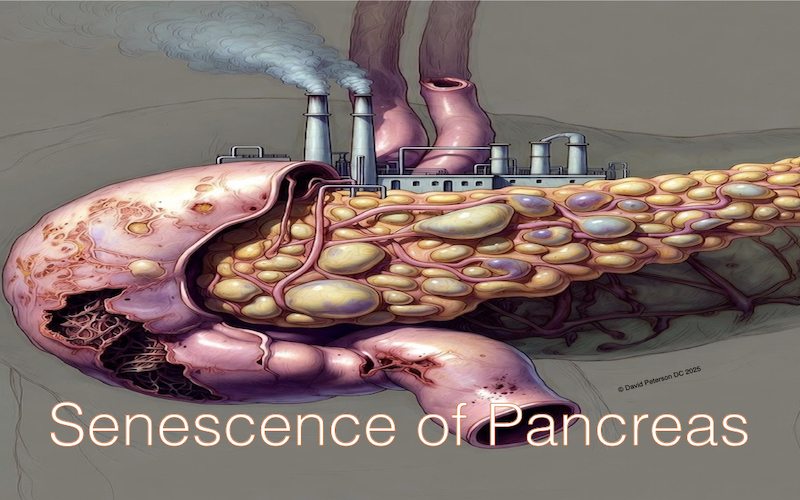
What actually happens when the pancreas “ages” (senescence-related problems)
- Acute or chronic pancreatitis (painful inflammation)
- Severe upper abdominal pain that can go through to your back
- Nausea, vomiting, fever
- Happens because enzymes start working inside the pancreas instead of in the intestine
- Pseudocysts (little lakes of trouble)
After a bad inflammation attack, fluid, dead tissue, and active enzymes can collect in sac-like pockets around the pancreas. These pseudocysts can:- Grow large and press on other organs
- Burst → spill digestive enzymes into the belly (this is an emergency)
- Get infected → life-threatening abscesses
- Exocrine pancreatic insufficiency (“the digestive factory shuts down”)
Not enough enzymes reach the intestine → food isn’t digested properly
You see:- Greasy, floating, foul-smelling stools (steatorrhea)
- Weight loss even if you’re eating enough
- Vitamin deficiencies (especially A, D, E, K)
- Insulin Resistance (the hormone factory breaks)
Senescent or destroyed insulin-producing cells → body can’t control blood sugar
Many people with long-term pancreatitis eventually develop diabetes (type 3c)
Common things that speed up pancreatic senescence
- Years of Antacid use.
- Years of constant alcohol use (biggest preventable cause)
- Repeated attacks of acute pancreatitis
- Gallstones blocking the pancreatic duct. If your gallbladder (an expendable organ) has been removed, chances are it was the pancreas causing the symptoms.
- Smoking
- Just plain aging — the older we get, the less reserve the pancreas has
Red-flag symptoms you should never ignore
- Sudden severe pain in the upper belly or back that doesn’t go away
- Persistent nausea/vomiting
- Yellow skin (jaundice) Pancreatic Pannicullitis
- Unexplained weight loss + oily stools
- Insulin Resistance undiagnosed – treated as a thyroid problem.
The bottom line
The pancreas has almost no ability to regenerate once it’s badly damaged. When its cells age (senesce) and the organ gets scarred or inflamed, problems tend to get worse over time, not better.
That’s why doctors say: “Take care of your pancreas — it doesn’t grow back.”
If you ever have the symptoms above, see a doctor quickly. Catching pancreatitis or pseudocysts early can prevent the kind of damage that turns into lifelong diabetes, malnutrition, chronic pain, or even life-threatening complications.Your pancreas works quietly in the background your whole life — treat it kindly (limit alcohol, don’t smoke, maintain a healthy weight), and it will usually keep working for you!